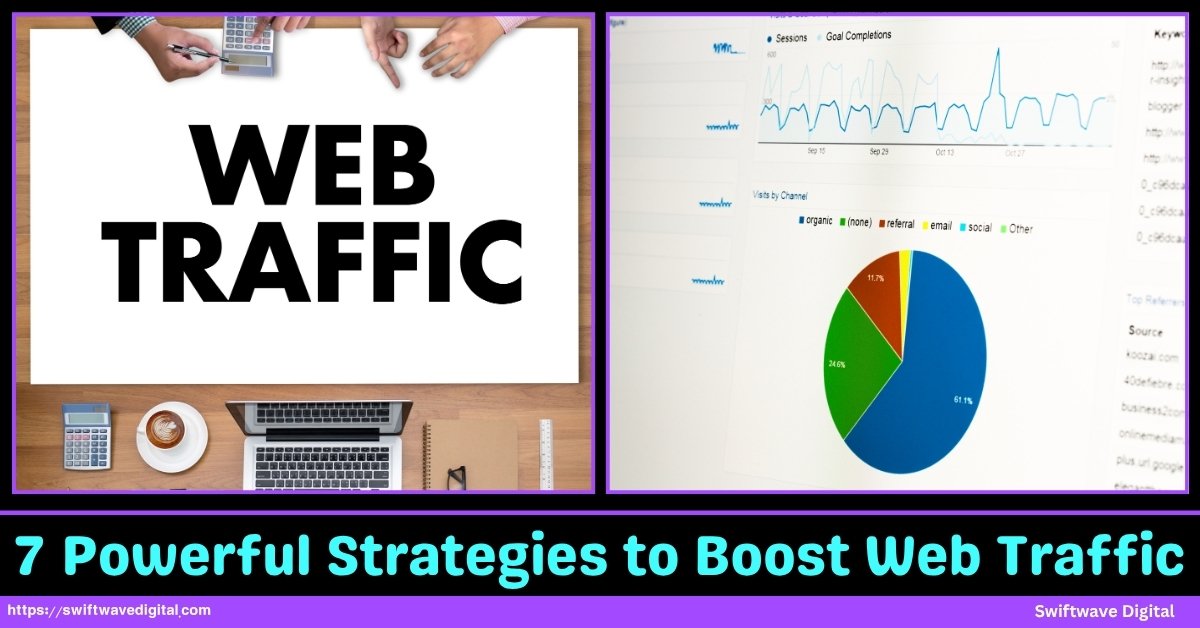
Web Traffic is the lifeblood of every online business — it’s what determines whether your website thrives or struggles in silence.
Without consistent, high-quality visitors, even the most visually appealing website or best-priced product won’t generate sales, leads, or engagement.
In today’s digital world, where over 1.8 billion websites compete for attention, getting noticed requires more than luck it demands a smart, structured strategy.
Driving web traffic isn’t about shortcuts or quick hacks; it’s about using proven, data-backed methods that actually work.
From understanding search intent and optimizing for SEO to leveraging social media distribution, backlinks, and performance analytics, success lies in executing what’s effective not what’s trendy.
Whether you’re a marketer, business owner, or content creator, knowing how to systematically attract and retain visitors is what separates stagnant sites from high-performing ones.
7 Powerful Strategies to Boost Web Traffic
In this guide, we will explain 7 powerful strategies to Boost Your Web Traffic effectively and sustainably.
1. Optimize for Search Intent (Not Just Keywords)
Web traffic starts with understanding what users actually want — not what you think they want. Search intent is the reason behind every query typed into Google.
If your content doesn’t match that intent, it doesn’t matter how perfectly optimized your keywords are — people won’t click or stay.
There are three main types of search intent: informational, commercial, and transactional. Informational means the user wants to learn something, commercial means they’re comparing options, and transactional means they’re ready to take action or buy. Your goal is to align your page content with these intents.
For example, if someone searches “best email marketing software,” they’re likely in the commercial stage. They want comparisons and summaries — not a deep tutorial. In this case, list posts or comparison guides work best.
To optimize for intent, always start with SERP analysis. Type your target keyword into Google and examine the top 10 results. Identify what type of content ranks — listicles, reviews, guides, or how-tos. This tells you what Google believes satisfies the searcher. Then, structure your content accordingly.
Use natural language and related phrases rather than repeating the exact keyword. Write for humans, not algorithms. Add sections that directly answer common user questions — it helps you win featured snippets and voice search results.
Finally, update your content regularly. Search intent evolves as trends, technologies, and industries change. A post that satisfied intent last year may not match it today. Continuous optimization ensures your site stays relevant and visible.
2. Leverage Content Clusters and Internal Linking
Google’s algorithm values expertise, structure, and authority. The best way to build that is by using content clusters — a system where one main “pillar” page covers a broad topic, and several “cluster” pages dig deeper into related subtopics.
Think of your website like a tree. The pillar page is the trunk, and the cluster pages are the branches. Together, they show Google that you’ve covered a topic comprehensively.
Here’s how to apply it. Choose a core topic that aligns with your business — for example, “Digital Marketing.” Create a detailed pillar page explaining the overall subject. Then write cluster posts like “Social Media Marketing,” “SEO for Beginners,” “Email Marketing Tactics,” and “Paid Advertising Basics.”
Each cluster post should internally link back to your pillar page using descriptive anchor text. Likewise, your pillar page should link out to each cluster post. This builds a web of context for search engines, showing them how your pages relate to each other.
This internal linking structure also benefits users by making navigation intuitive. Visitors can easily explore more pages, reducing bounce rates and increasing time on site. Additionally, internal links pass “link equity,” helping all pages rank better collectively.
Keep links relevant — don’t overdo it. Two to four contextual links per page are enough if they add value. Regularly audit and refresh links to ensure none lead to outdated or broken pages.
When you build content clusters correctly, Google starts viewing your website as a subject authority. That authority leads to higher rankings, which directly translates into more consistent, long-term web traffic.
3. Use Data-Driven Blogging (Not Guesswork)
Many blogs fail because they’re based on assumptions rather than real data. Writing content just because it “sounds good” or “feels right” doesn’t cut it anymore.
Successful content creation depends on analyzing what the data actually says about audience interest, keyword demand, and engagement patterns.
Start by using Google Search Console to identify pages or keywords that already generate impressions but have low clicks. These are untapped opportunities your content is showing up, but not attracting clicks. Improve titles and meta descriptions to make them more compelling.
Next, use keyword research tools like Ahrefs, SEMrush, or Google Keyword Planner. Look for keywords with moderate competition and solid search volume. Focus on long-tail keywords — specific phrases that match intent more precisely and are easier to rank for.
Then, analyze what’s performing well in your industry. Look at competitors’ top pages, identify patterns, and note the type of content (lists, guides, tutorials) that gets engagement. Don’t copy — adapt the strategy to your audience.
Once your content is published, measure performance regularly. Check metrics like bounce rate, time on page, and organic clicks. If certain articles perform better, identify what made them successful — headline, structure, visuals, or readability. Apply those insights to future posts.
Finally, update content periodically. Add new data, refine headlines, and replace outdated information. Data-driven blogging is not just about numbers; it’s about continuously improving your content to meet real-world demand and maintain authority in your niche.
4. Utilize Social Media Distribution
Publishing great content is useless if no one sees it. That’s where smart social media distribution comes in. The goal is not to post everywhere but to post effectively where your audience already spends time.
First, repurpose your blog content for each platform. Don’t just copy and paste the link — reformat it. On LinkedIn, create an engaging summary or key takeaways from the blog.
On Instagram, turn main points into carousel graphics. On X (Twitter), post short, attention-grabbing threads that summarize the blog and drive curiosity.
Social media algorithms reward engagement, not links. So focus on sparking conversation before dropping a URL. Share insights, ask questions, or post a quick tip with a soft CTA like “Read the full guide on our website.”
Join relevant groups or communities in your niche. Facebook, Reddit, and LinkedIn groups have highly targeted audiences. Engage first — offer advice or insights — and then share your content when relevant. This approach attracts qualified visitors instead of random clicks.
Consistency matters more than volume. Use scheduling tools like Buffer, Metricool, or Hootsuite to maintain a steady posting rhythm. Analyze engagement rates weekly and focus on the platforms bringing real results.
Smart social media use amplifies visibility, builds trust, and drives referral traffic that complements your SEO efforts. Over time, this ecosystem strengthens your brand’s presence across multiple channels, turning social followers into long-term website visitors.
5. Invest in Paid Traffic Strategically
Organic growth is crucial, but it often takes months to gain momentum. To accelerate results, paid advertising can be a strategic addition — if done intelligently. Paid traffic should not replace organic marketing but rather support it.
Start by defining your target audience clearly. Use tools like Meta Audience Insights or Google Ads Planner to understand demographics, interests, and behaviors. The tighter your targeting, the lower your cost per click.
Next, focus on value-driven ads. Instead of promoting products directly, offer something useful like a free guide, case study, or webinar that solves a problem. This builds trust and encourages people to visit your site willingly.
Implement retargeting campaigns. Most visitors don’t convert on their first visit — retargeting brings them back. Show ads only to users who’ve engaged with your content, watched videos, or visited specific pages. Retargeting improves conversion rates and reduces wasted spend.
Split-test everything — headlines, images, and CTAs. Sometimes, a single word change can double your click-through rate. Track your cost per lead and continuously optimize based on performance data.
Lastly, combine paid traffic with organic strategies. Promote your top-performing blog posts with small ad budgets. These posts are already proven to engage, so amplifying them increases reach without wasted spend.
When done strategically, paid traffic can deliver fast visibility, support lead generation, and feed data back into your SEO and content strategy.
6. Improve Page Speed and Mobile Experience
No one likes waiting. Page speed directly affects user experience, search rankings, and conversions. A slow website not only frustrates visitors but also pushes them to competitors. Google reports that even a one-second delay can reduce conversion rates by 7%.
Start by testing your website on Google PageSpeed Insights or GTmetrix. These tools show what’s slowing you down. Common culprits include oversized images, unnecessary scripts, and unoptimized hosting.
Compress images without losing quality using tools like TinyPNG or ImageOptim. Minify CSS and JavaScript files to reduce load time. If your website uses WordPress, install caching plugins like WP Rocket or LiteSpeed Cache. Enable lazy loading so images only load when a user scrolls to them.
Next, ensure your site is fully mobile-optimized. Over 60% of web traffic comes from mobile devices. A site that looks perfect on desktop but breaks on mobile is losing more than half its potential audience. Use responsive design, clear navigation, and large, easy-to-tap buttons.
Also, eliminate intrusive pop-ups that block mobile users. Google penalizes such interruptions. Keep your pages simple, fast, and visually clean.
Finally, choose a fast, reliable hosting provider and enable a Content Delivery Network (CDN) to serve pages faster across regions.
Improving speed and mobile usability doesn’t just enhance rankings — it boosts engagement, lowers bounce rates, and ensures your traffic converts instead of leaving in frustration.
7. Build Backlinks through Value, Not Spam
Backlinks remain one of the strongest ranking signals in SEO, but not all links are equal. The goal is to earn backlinks through genuine value — not by buying or spamming irrelevant sites.
Start by creating linkable content. This includes data reports, guides, and evergreen resources that other websites naturally want to reference. For example, publishing a “2025 Marketing Trends Report” or “Industry Benchmarks Study” gives journalists and bloggers a reason to cite your work.
Next, reach out for guest posting opportunities. Offer to write high-quality, informative articles for reputable blogs in your industry. Ensure your guest post adds real value — not just a backlink. Use your author bio or a contextual mention to link back to your site naturally.
Another effective method is broken link building. Find outdated or broken links on relevant websites and suggest your similar content as a replacement. Tools like Ahrefs or Check My Links make this process simple.
Consistency and relationship-building are key. Engage with other creators on LinkedIn, Twitter, or email. Build genuine connections before pitching. Over time, you’ll attract more organic backlinks without begging for them.
Quality beats quantity. Ten backlinks from authority sites are worth more than a hundred from low-quality directories. Keep your link profile clean, diverse, and natural to maintain credibility in Google’s eyes.
Bonus: Track, Measure, and Refine
Driving traffic without tracking is like driving blindfolded — you might move forward, but you have no idea where you’re going. Analytics help you identify what’s working, what’s failing, and where to focus next.
Start with Google Analytics and Search Console. Track metrics like organic sessions, click-through rate, bounce rate, and time on page. Identify your top-performing content and learn from it.
Monitor referral traffic to see which channels bring the best visitors. Compare engagement rates across social, search, and paid campaigns. If a channel underperforms, either optimize it or shift resources to higher-performing ones.
Set up conversion goals — newsletter sign-ups, purchases, or lead form submissions — to measure real impact. Use tools like Google Looker Studio to visualize progress through custom dashboards.
Review data weekly, not yearly. The sooner you catch a problem, the faster you can fix it. Regular refinement keeps your strategy efficient and your growth consistent.
Tracking and refining turn traffic generation into a predictable, scalable process instead of guesswork.
Conclusion
Web traffic is not built overnight it’s earned through strategy, consistency, and data-backed execution. The key to sustainable growth isn’t using every tactic out there; it’s mastering the few that consistently deliver results.
By focusing on user intent, creating structured content clusters, optimizing with real data, leveraging social channels intelligently, and maintaining fast, mobile-friendly performance, you lay the foundation for long-term visibility and trust.
Paid campaigns can help accelerate that growth, but the real power comes from combining organic and paid efforts strategically. Every click, impression, and interaction should lead toward building credibility and value not just numbers.
Finally, tracking and refining your results ensures you stay ahead of changes in audience behavior and search algorithms. Traffic generation is not a one-time project but an ongoing process of improvement.
When done right, it turns your website from a static page into a living, growing digital asset that attracts, engages, and converts consistently.